
Periodontal (Gum) Disease Treatment – Goode, VA
Helping You Overcome Gum Inflammation
Periodontal disease (also known as gum disease) is the leading cause of tooth loss for adults who are over thirty-five years of age, and its presence has been shown to contribute negatively to overall health conditions like heart disease, diabetes, Alzheimer’s, and cancer. That’s why Drs. Brandon and Julia White and the rest of our team at White Cosmetic & Family Dentistry make the diagnosis and treatment of periodontal disease a top priority. By diagnosing this condition at the earliest stage possible, we can reverse ill effects and get patients of all ages back to enjoying the healthy smile they deserve. When early diagnosis is not possible, we offer periodontal (gum) disease treatment in Goode, VA.
Why Choose White Cosmetic & Family Dentistry for Periodontal (Gum) Disease Treatment?
- Personalized treatment plans catered to your needs
- Experienced dentists who are highly trained
- Compassionate team of professionals ready to help
How Do I Know if I Have Periodontal Disease?

There are many cases where potential symptoms may be too mild for an untrained eye to recognize. That’s why attending regular check-ups at our Goode dental office is so important to protect and maintain oral health.
Here are some common signs:
- Bleeding gums.
- Discomfort felt throughout the mouth.
- A receding gum line.
- Severe bad breath that lingers even after brushing/flossing/using mouthwash.
- Significant tenderness or redness in the gums.
Gum Disease Treatment Options
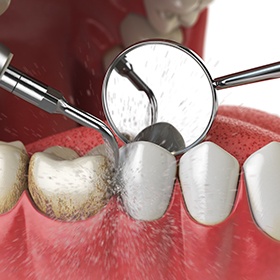
Our recommended treatment for periodontal or gum disease depends on how far it’s progressed. In some cases, more frequent or in-depth cleanings may be enough to return your smile to full health. We also offer root scaling and planing, an involved treatment where we clean the areas of teeth beneath the gums and smooth the surfaces of your tooth roots. Antibiotic therapy could be needed as well. Dr. White will review these options with you once we know more about your unique case and will work with you to create a treatment plan that restores oral health.
Scaling & Root Planing
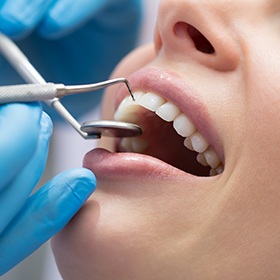
In this treatment, we go beyond a normal teeth cleaning. Scaling entails in-depth cleaning both above and below the gum line, clearing out pockets of plaque and bacteria that have accumulated. Then, once we ensure that your teeth are free from plaque, we can perform root planing, a procedure in which the rough, exposed roots of these vulnerable teeth are made smooth to prevent plaque from settling there again in the future.
Antibiotic Therapy

In some cases, we need to apply a topical antibiotic to make sure that all the harmful bacteria have been eliminated temporarily. This treatment is painless and can allow your gums to heal and recover from the bacteria that cause harmful inflammation. In the end, antibiotic therapy aids in restoring your oral health after periodontal disease, giving you back a healthy, happy smile.
Periodontal Maintenance
So how can you prevent gum disease from happening or coming back? At minimum, you need to do the following:
- Visit our dental office in Goode twice every year for checkups and cleanings.
- Brush your teeth twice every day for two minutes at a time.
- Floss your teeth at least once every day.
To keep plaque and bacteria at bay, you can implement other healthy habits into your routine, including:
- Reducing your sugar intake.
- Using an antimicrobial mouthwash daily.
- Brushing your tongue daily.
- Drinking more water.
Gum Disease Treatment FAQs
How common is gum disease?
You’re not alone if you feel uninformed or having questions about gum disease, such as how common a condition it really is. You might think you’ve developed a rare condition, but the truth is that gum disease is incredibly common.
For example, sources estimate that about 64.7 million Americans, representing about 47% of the population, who are 30 years or older suffer from some sort of periodontal problem. However, those numbers tend to increase with age, as about 60% of those who are 65 years or older have developed advanced gum disease, also known as periodontitis.
Does gum disease ever go away on its own?
Most oral issues don’t resolve by themselves, and gum disease is no exception. With that said, it’s often possible to halt and even reverse the earliest stage, gingivitis, by improving your at-home dental hygiene routine. Brushing alone only removes an estimated 40% of the plaque buildup from your enamel; flossing is required to remove the remaining residue from your teeth and gums to help prevent oral issues.
But if your condition has already evolved to its more advanced stage, periodontitis, it might not be fully curable but can often be managed with ongoing treatment and maintenance.
How long does gum disease treatment take?
The length of time it takes to improve your dental condition depends on the severity of the disease. For example, early-stage gingivitis can sometimes be addressed within just a couple of weeks of flossing more consistently twice daily. However, it might take several months for those with advanced-stage periodontitis to see improvements.
Then, even once your condition is treated, you might require ongoing maintenance and periodic retreatments to preserve your connective tissues long-term.
How can I avoid developing gum disease?
Gum disease often starts small and doesn’t exhibit noticeable symptoms until it reaches more advanced stages, and by then it may be too late to completely cure your condition. That means proper prevention is vital to protecting your grin.
Most patients can help prevent periodontal problems by:
- Implementing a consistent at-home dental hygiene routine. In addition to brushing both morning and night, you should also floss your teeth to help remove harmful buildup that causes common oral issues, such as cavities and gum disease.
- Choose foods carefully. Avoiding overly sugary ingredients can help prevent problems, and incorporating more wholesome foods, such as citrus fruits or leafy greens containing vitamin C, can support your connective tissues.
- Manage other conditions. Gum disease has been linked with other health concerns, such as diabetes, Alzheimer’s disease, and heart problems, which must also be managed to avoid worsening dental problems.
- Scheduling routine dental visits. Having a checkup and cleaning with our team every 6 months allows us to monitor your condition and address any areas of concern, such as gingivitis, before it progresses.